In Part 1 of this series, we explored how AI is changing the way people search for information online. We also discussed why traditional SEO is far from obsolete. While AI-powered platforms like ChatGPT, Gemini, and Perplexity are becoming part of the search experience, Google Search, Google Maps, and local search continue to play a vital role in helping customers find businesses.
The real question for small and medium-sized businesses (SMBs) isn’t whether SEO or AI will win. Instead, it’s about knowing where to invest your time and marketing budget. The good news is that many of the strategies that improve your search engine rankings also make your business easier for AI platforms to understand.
So, where should small businesses focus their time and budget today? Let’s explore the strategies that deliver the best results.
Why SEO Still Delivers the Highest ROI for Small Businesses
SEO delivers the highest ROI for small businesses because it generates compounding organic traffic without ongoing per-click costs, builds long-term local credibility, and targets high-intent buyers at a fraction of the cost of paid advertising.
Cost-Effectiveness and Sustainability
- No continuous ad spend: Unlike paid ads that stop the moment your budget runs out, organic rankings continue to drive free, qualified visitors for months or even years.
- Decreasing cost per lead: Initial optimization efforts compound over time, meaning your overall cost per acquisition drops as organic traffic grows.
- Budget protection: Small businesses avoid bidding wars on expensive keywords, building a resilient, low-cost asset instead of renting short-term visibility.
Consumer Trust and Intent
- Higher buyer intent: Search engine users are actively looking for specific solutions or products, meaning organic search traffic converts at a much higher rate.
- Built-in credibility: Consumers naturally place more trust in organic search results than in sponsored ads, viewing top-ranking brands as industry leaders.
- Local dominance: Optimizing for local searches and map packs captures nearby buyers who are ready to visit a store or call immediately.
- Learn about Nucleo Analytics for insights on long-term organic growth.
- Read an analysis on Buimb Digital Marketing regarding sustainable traffic.
- Review LinkedIn perspectives on why organic channels outperform ads.
How AI Is Changing the Customer Journey
The traditional, linear marketing funnel is obsolete. AI has transformed the customer journey into a dynamic, data-driven ecosystem that anticipates customer needs in real time.
1. Discover: From Keyword Search to Intent Prediction
AI shifts the discovery phase from active searching to passive, highly relevant exposure.
- Predictive Ads: Machine learning models analyze past browsing metrics, hover times, and purchase histories to serve hyper-targeted ads before a user explicitly searches for a product.
- Visual Search Integration: Consumers use computer vision tools (like Google Lens or Pinterest Lens) to snap photos of real-world objects and instantly find purchasing links online.
- Semantic Search: Natural Language Processing (NLP) allows search engines to understand the underlying context of conversational queries, prioritizing direct answers over basic keyword matching.
2. Evaluation: From Manual Research to Automated Curation
AI eliminates choice fatigue during the consideration phase by filtering options based on precise user profiles.
- Algorithmic Recommendations: Collaborative filtering neural networks analyze millions of global user profiles to generate hyper-personalized “Suggested for You” feeds.
- Conversational AI Assistants: Advanced chatbots handle complex product comparisons, answer technical specifications, and resolve objections instantly inside the chat window.
- Dynamic Pricing Engines: Machine learning algorithms adjust pricing in real time by evaluating market demand, competitor stock levels, and user loyalty history.
3. Retention: From Reactive Support to Predictive Loyalty
AI shifts post-purchase care from a cost-center helpdesk to an automated customer retention engine.
- Predictive Maintenance: Internet of Things (IoT) sensors track product performance metrics and trigger automated service scheduling alerts before a hardware failure occurs.
- Replenishment Forecasting: Predictive models analyze individual consumption rates to send automated restock reminders precisely when a customer is running low on a product.
- Automated Sentiment Triage: Natural language tools continuously monitor social mentions and reviews, immediately routing negative feedback to specialized retention teams.
How to Optimize Your Website for Both SEO and AI
To optimize your website for both human search engines (SEO) and artificial intelligence engines (LLMs/AI search), you must shift from keyword stuffing to structuring data for machine readability while maintaining high-value content for human users.
1. Technical Architecture (For AI & SEO Crawlers)
- Deploy Schema Markup: Use JSON-LD structured data explicitly for products, articles, organizations, and FAQs to help AI bots parse details without guessing.
- Maintain Open Crawl Paths: Ensure your robots.txt file permits access to user-agents like GPTBot, ClaudeBot, and Google-Extended so your data trains their answers.
- Optimize Core Web Vitals: Keep page load speeds under two seconds; both Google algorithms and AI scraper efficiency rely heavily on fast server responses.
- Build Clear Site Hierarchy: Use flat URL structures and logical internal linking patterns to let AI bots crawl your conceptual relationships easily.
2. Content Strategy (For Human Value & AI Synthesis)
- Adopt the E-E-A-T Framework: Focus heavily on Experience, Expertise, Authoritativeness, and Trustworthiness; AI search engines prioritize verified primary sources.
- Write Direct Answers First: Place a concise summary or direct answer at the top of your pages to feed AI search snippets and Google’s featured snippets.
- Incorporate Niche Vocabulary: Use exact industry terms and semantic variations instead of repeating a single target keyword across the text.
- Publish Original Data: Create case studies, proprietary surveys, or unique charts; AI tools frequently reference and link to original source statistics.
3. On-Page Structure (For Readability & Extraction)
- Use Strict Heading Hierarchy: Organize your page with a single <h1> tag followed by logical <h2> and <h3> tags to form a clean content outline.
- Build Conversational Q&A Blocks: Format section headers as direct questions (e.g., “How to…”) to directly match voice search and AI prompt inputs.
- Utilize Clean HTML Lists: Group sequential steps or product features into bulleted or numbered formats to make information extraction frictionless for scrapers.
- Add Contextual Image Alt Text: Write descriptive, keyword-conscious alt tags for images so computer vision algorithms can index your visual assets accurately.
Why Local SEO Is More Important Than Ever
Local SEO is more important than ever because modern search engines rely heavily on geographic proximity, zero-click searches, and hyper-local mobile intent to deliver immediate, personalized results to users on the go.
- Surging local intent: Over 46% of all Google searches now seek local information, transforming search engines into digital storefront directories.
- Proximity-based discovery: Smartphone users expect algorithms to automatically detect their location and provide immediate, “near me” recommendations.
- High-conversion urgency: Mobile searchers seeking local businesses have immediate intent; 76% of them visit a related store within 24 hours.
- Zero-click supremacy: Google’s Local Three-Pack displays business details directly on the results page, making local visibility crucial for capturing traffic without website clicks.
- AI search synthesis: AI engines and conversational bots extract local business data directly from directory citations to answer voice queries instantly.
- Review-driven rankings: Search algorithms heavily prioritize fresh, high-rated customer reviews, transforming public sentiment into a primary ranking factor.
- Leveling the playing field: Strong local optimization allows independent brick-and-mortar stores to outrank massive national corporations within specific geographic radii.
- Maximum marketing efficiency: Targeting neighborhood-specific keywords minimizes ad spend waste by filtering out audiences outside your physical service boundary.
- Mobile-first dominance: As mobile traffic grows, optimized local profiles capture on-the-move consumers using GPS navigation mapping apps.
SEO and AI Checklist: Where Small Businesses Should Focus First
To successfully compete in modern search, small businesses must optimize for traditional search engines (Google SEO) and generative AI engines (like ChatGPT and Google Gemini) simultaneously.
Here is the exact priority checklist where your business should focus its resources first:
Check 1: High-Priority Foundations (Week 1–2)
- Claim and Complete Your Google Business Profile: Fill out every field, select precise categories, and upload high-resolution photos weekly.
- Inject JSON-LD Schema Markup: Implement local business, product, or article structured data code to help AI scrapers extract your pricing, hours, and location instantly without guessing.
- Audit Your Robots.txt File: Ensure you are not accidentally blocking AI crawlers like GPTBot, ClaudeBot, or Google-Extended so your business can be cited in AI search summaries.
Check 2: Content Architecture & Formatting (Week 3–4)
- Answer Prompts Directly: Place a clear, 2-to-3-sentence direct answer or summary at the very top of your pages to capture Google’s Featured Snippets and AI conversational responses.
- Format with Machine-Readable Lists: Use clear bullet points or numbered lists under <h2> and <h3> tags, making your content easy for AI engines to scan, clip, and reuse.
- Build Conversational Q&A Content: Structure your content around natural long-tail questions (e.g., “How do I fix a leaky pipe fast?”) to align perfectly with modern voice searches and user AI prompts.
Check 3: Authority & Trust Building (Week 5–8)
- Launch an Automated Review Campaign: Set up automated text or email requests to gather fresh Google reviews; search algorithms and AI engines heavily prioritize recent, high-rated customer feedback.
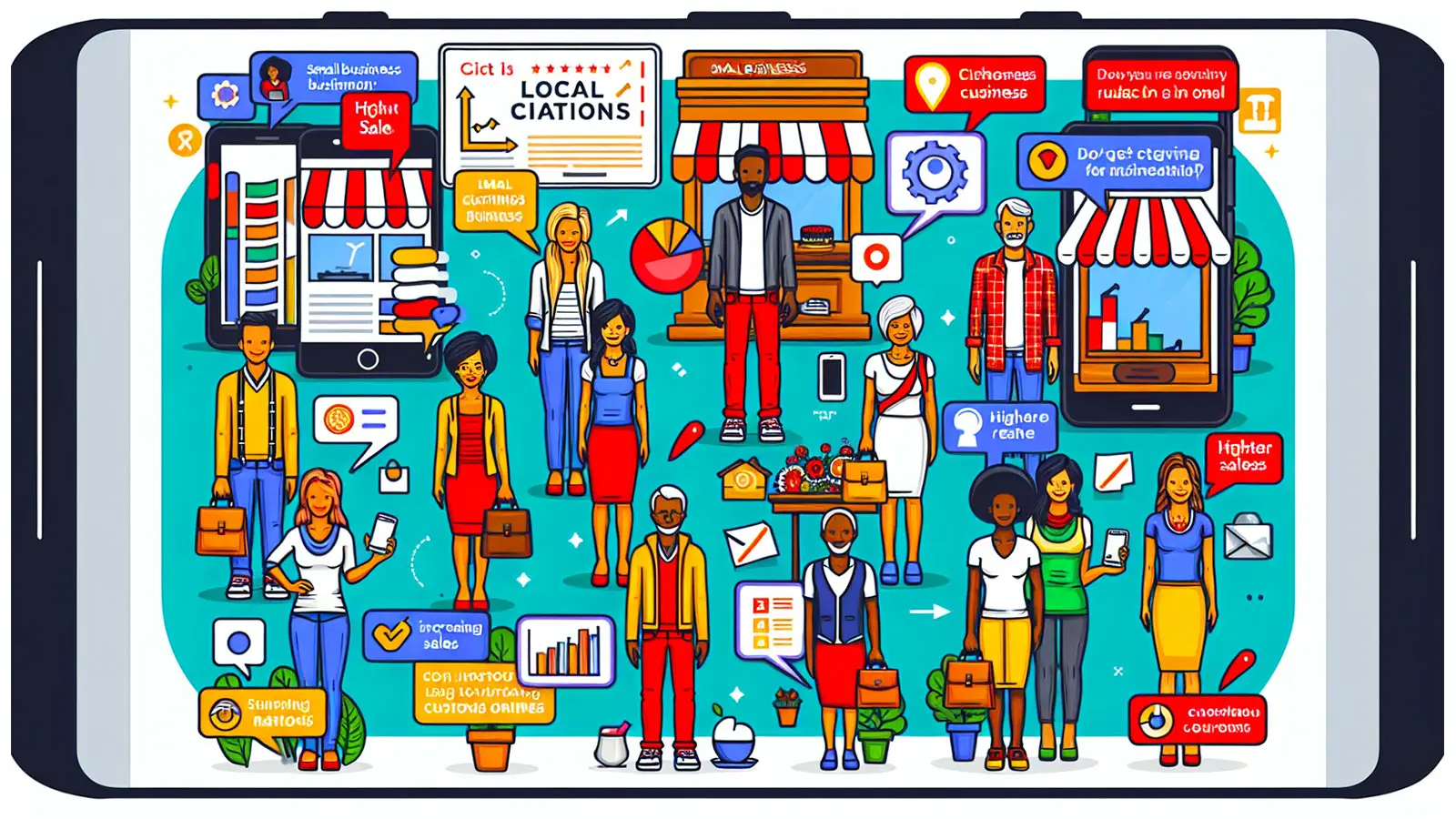
- Build Hyper-Local Citations: Ensure your business Name, Address, and Phone number (NAP) are identical across Apple Maps, Yelp, Bing, and industry-specific directories.
- Publish Proprietary Insights: Share real customer case studies, local market data, or unique step-by-step guides; AI models love citing original data sources over generic rewritten content.
Our Approach at Ellipsis Marketing
If a small business owner has to decide between traditional SEO/Local SEO or AIO, we recommend focusing on SEO but start making adjustments based on best practices for AIO.
At Ellipsis Marketing, we don’t believe small businesses need to abandon proven SEO strategies to keep up with AI. Instead, we focus on building a strong foundation that supports both traditional search engines and emerging AI-powered search experiences.
Our websites are designed with SEO best practices from the start, including clear site structure, helpful content, strong technical performance, and an excellent user experience. These same fundamentals also help AI platforms better understand and reference your business.
Conclusion
For most small businesses, the smartest approach is to continue investing in proven SEO strategies while adopting AI best practices that strengthen your online presence. Instead of chasing every new trend, focus on building a trustworthy online presence that serves both your customers and the technologies they use. That’s the best way to stay visible as search continues to evolve. At Ellipsis Marketing, we make online marketing simple and affordable for small businesses. We offer worry-free websites and advertising programs with low monthly costs, no setup fees, and active updates to help your business stay competitive and continue growing.